Neuroscience

What Your Wearables Can Actually Tell You (And What They Shouldn't Tell You!)

  • By Sam Bjelis
  • Updated August 21, 2026
  • 8 min read
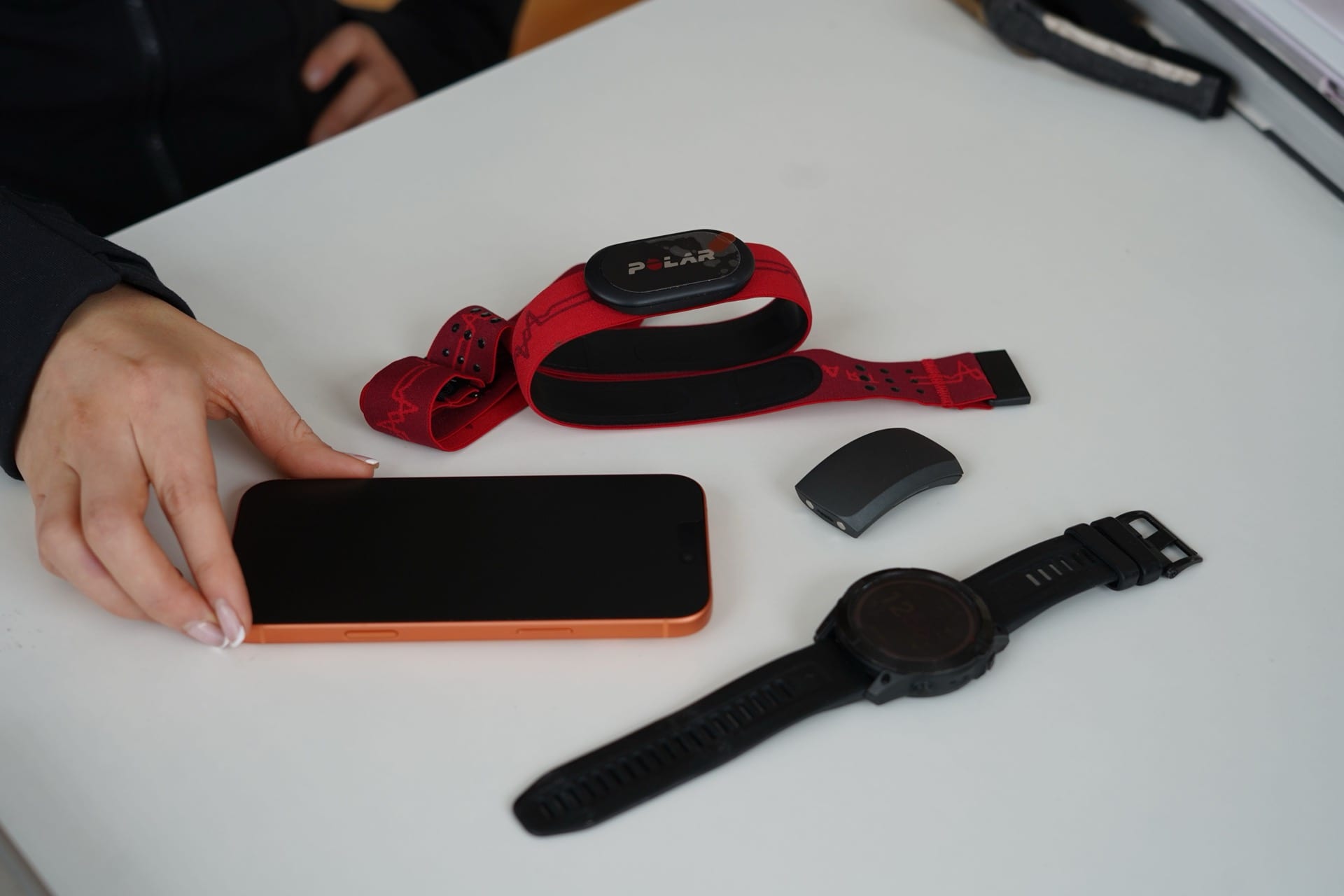
A wearable fitness tracker, smartwatch, and smartphone on a white table.

Wearable technology is everywhere. Walk into almost any gym and you’ll see athletes checking their watch after every set or proudly announcing and comparing scores.

The technology and data we have access to now is incredible. But interpreting and using it is tricky and very context dependent.

As strength and conditioning coaches, we’re being given more data than ever before. Heart rate, HRV, GPS, sleep, workload, stress scores, skin temperature, etc. The list keeps growing. While these tools have changed the way we monitor athletes, they’ve also created a common misconception:

Wearables provide data. They do not provide diagnoses!

Understanding that difference is one of the most important parts of being a good coach.

They’re Great at Tracking Trends

Wearables are fantastic for monitoring what an athlete is doing over time. They can help us identify changes in training load, recovery, sleep habits, heart rate responses, movement volume, and overall adaptation to training.

Notice the phrase over time.

One bad night’s sleep doesn’t mean an athlete is under recovered just like one low HRV score doesn’t mean they’re overtrained or stressed. One readiness score doesn’t mean today’s session is ruined!

The real value comes from looking at trends alongside performance. If HRV has been dropping all week, jump height is down, the athlete feels terrible, and they are moving poorly, then it’s worth adjusting training.

This is why I love when we blend wearables for in-season competition, to mitigate the fatigue that can lead to injury and poor performance.

What is key is that the wearables inform coaching decisions especially when compounded overtime and with other data.

The data does not tell the whole story

One of my biggest concerns as a performance coach training in neuroscience, is seeing people completely believe in wearable scores. For example:

Low HRV? “My nervous system is fried.”

Poor sleep score? “I guess recovery is impossible today.”

High readiness? “Looks like I can max out!”

Not quite how these things work but the brain will believe what it is told, especially with “proof” through data scores! So, the placebo effect can be negative and positive here.

Physiology changes for all kinds of reasons. Stress, travel, hydration, illness, nutrition, caffeine, menstrual cycle, yesterday’s leg day, or simply existing as a human being can all influence wearable data.

On top of that, most companies use proprietary algorithms especially with ‘Complied’ scores like readiness and strain. In other words, your wearable gives you a score but doesn’t fully show you the recipe behind it. Two devices can measure similar physiological data and still tell completely different stories.

I think the real power in interpreting data properly is noticing the patterns overtime. This reduces variability due to differences in algorithms and interpretive scores.

Coaches: Use Wearables to Start Conversations

The best coaches use wearables to ask better questions!

Maybe HRV is lower than normal. Maybe sleep has been poor for several nights. Maybe sprint performance or force plate data has dropped despite training remaining the same. This signals fatigue but I think it is a great opportunity to get more information that could paint a better picture on how to find the right solution.

Those observations become the start of a conversation…

How are you feeling?

How’s school or work?

How’s recovery?

Anything unusual this week?

This builds trust and connection and gives more info on what the athlete is experiencing.

The flip side is also true, an athlete may not be completely aware of their fatigue so in this case it is really good to have data that can give more cues on when to moderate load.

Know When to Refer!

Sometimes wearable data does raise a flag.

If an athlete has persistent fatigue, repeated abnormal heart rhythm notifications, unexplained drops in exercise tolerance, or symptoms like dizziness during training, that is usually the cue to refer out because the problem may require a solution beyond our scope of practice.

Coach’s Takeaway:

Wearables are one of the best tools we’ve ever had for monitoring performance, recovery, and training adaptation. I love to discuss everything as a potential tool, and wearables have the greatest opportunity in my eyes.

But, wearables have limitations too. They don’t know the athlete’s training history. They don’t know they’re writing exams, travelling across time zones, dealing with life stress, or stayed up until 2 a.m. watching TikTok.

Combining wearable data with performance testing, athlete conversations, experience, and good judgement is how elite decisions are made!

IMO

I do not wear wearables at all. It adds more information overload to my day which is not something I want. If I wake up with a low sleep, recovery or readiness score then it opens a rabbit hole of decisions I now need to make going into my day. So, I do not rely on a watch to tell me if I am ready for the day or not. Because, my day and the things I need to achieve need to be achieved anyways. If I allow myself to see or think that I am not prepared for that, then my mind and body will believe it, and then my success in my day will also be low. So, I only rely on feeling. If I wake up feeling low or foggy, then I do what I need to do to prepare myself for the day (long walk, stretch instead or workout, sleep an extra hour, cold shower, electrolytes etc). However I strongly believe wearables are impactful in Athletic performance. This is where marginal performance, meaning competitive advantage, makes a difference in outcomes. When a top 2% elite athletes goes up against another 2%, it is the 2.1% that will win. So that 0.1% measurable improvement (made from using HRV or mental fatigue scores to inform training decisions leading up to competition day) makes all the difference. Disclaimer: This opinion is not applicable in every case. However, in my coaching philosophy, this is generally the opinion I tend to follow.

Q&A (IMO!!)

  1. Should I train with a low recovery or readiness score?
    • Yes, even injured athletes are required to train in some capacity. However, the scores can inform intensity changes. However, back to the original thought process-wearables help us measure something for the goal of tracking desired changes derived from training manipulations. You may be more ready then you think to train with a low score, because the wearable cannot measure everything contributing to your fatigue quite like your brain. Always trust your own opinion and feeling over a wearable score.
  2. Is a wrist or finger based heart rate reading correct?
    • Yes they can be correct-But think of it as a percentage correct score. Technically you want a measurement as close to the organ as possible to get close to 99% correct as possible. A headband for the brain. A chest strap for the heart. Skin temp on the skin. Body temp under the tongue. The farther from the organ, the less accurate and correct the reading and so the less the reading should be trusted, unless combined with other measures to verify its validity.
  3. Accuracy of strain scores?
    • The only people who will know the exact accuracy of these scores are the ones who created them, so it would be internal information the company has. One thing to note, a strain score is a recipe of other scores. I actually love this in theory, because it provides more body context then just one measure could provide. The downside is that the more a recipe has in it, there is more room for error. So again, this is why it is important to have a reason for using and interpreting a score.
    • These scores also cannot be referenced to clinical norms, and cannot be used absolutely to compare across individuals. They are extremely individual and context specific.
  4. Is data harmful?
    • Absolutely. Data is meant to be collected, analyzed and interpreted by trained professionals because there is a sophisticated process to it. Also, Data reliance and obsession can lead to mental load overload and a weakened internal awareness ability.
    • The brain has an internal weighing system. Think of it like the libra scales. The brain is built to know everything going on, weighs the options, and uses this info for your executive system to the two weigh scales can tip in just the right direction. It is like a circuitry system. [insert diagram from neuro anatomy on the meduall obongata system and the dopamine receptors decision tree. then insert the same with the wearblaes taking over the secondary branch, thus weakening our own internal system, and creating a reliance]
    • IMO, but i think that data should be collected and NOT interpreted by the user. It should be sent to a qualified professional who is using it for a specific and measurable purpose (SMART goals!) so it takes the mental load off of the user, and does not disrupt their internal decision system. And if there isn’t a professional in your circle wanting your data for any specific training goal, then you may not actually require this data! It may just be an ‘extra’ slowly weakening your internal decision/awareness system.