
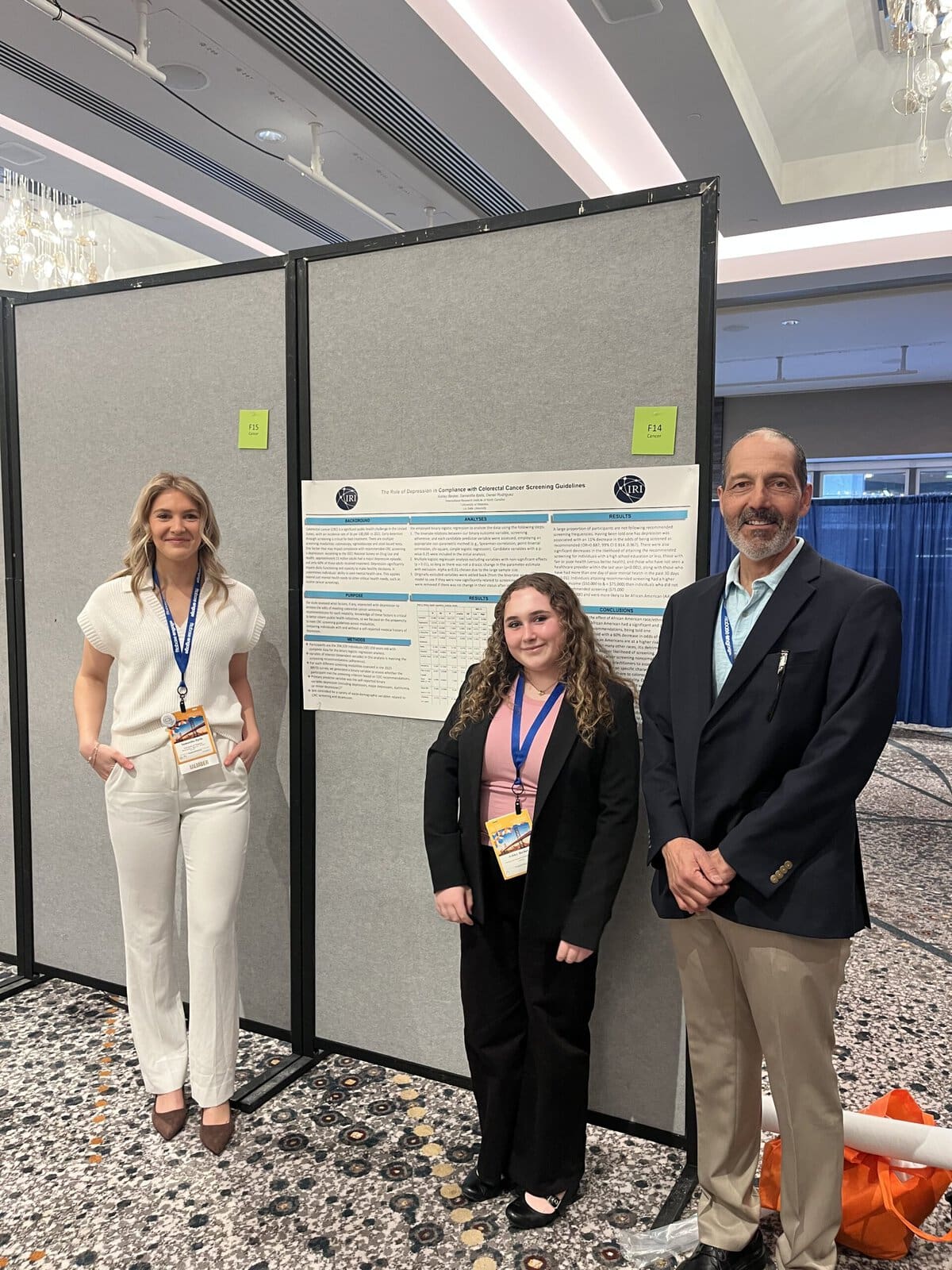
The Society for Behavioural Medicine Annual Conference 2025, San Francisco
There are few things that beat the perks of attending conferences. Free flight and accommodations, networking with experts, free food and swag, catered dinners, cute outfits, and exploring a new city! The only catch-You have to stand beside a poster in a room of 50 other students and answer the same questions again and again and again. But I mean, what else do you do with 12+ months of full time research?
Well straight off the press in this blog post are the most interesting posters I visited, and I think you might find them interesting too! Topics include:
- Master Lecture on GLP-1’s
- Digital Physical Health – Influencers??
- Brain Health
- Woman’s Health – Menopause!
Master Lecture: The future of obesity medication and behavioral interventions in the age of the GLP-1 receptor agonists.
Michelle Cardel, PhD, MS, RD, Weight Watchers International, University of Florida
Jamy Ard, MD, Wake Forest School of Medicine
Research & Lessons Learned:
I had the opportunity to learn from Dr. Ard and Dr. Cardel in lecture and personal conversation with Dr. Cardel about their insightful work with GLP-1 medications. I spoke with Dr. Cardel about training considerations and GLP-1’s and will post that blog soon.
From my perspective:
GLP-1 treatments show strong success in obesity care, though cost and variable response are major challenges. Their impact extends beyond weight regulation, with evidence suggesting influence on neural networks and functional connectivity. This highlights obesity’s biological complexity and the body’s interconnected systems.
Yet, medication alone is insufficient and the application of this drug proves that. Genetics, cellular mechanisms and individual phenotype shape treatment outcomes.
GLP-1 has solid evidence of effective biological change, and also raises questions about whether it also acts through associative brain circuits or direct peripheral pathways. So, lifestyle interventions, especially physical activity, remain critical for enhancing efficacy, preserving lean muscle mass, and supporting cardiovascular health.
Equally important is shifting the narrative that obesity is a chronic disease, not a ‘moral failing’. Understanding why GLP-1 fails in some and ensuring equitable access are essential. The future of obesity treatment lies in comprehensive care. Integrating pharmacological, behavioral, neuro-cognitive and lifestyle strategies to fully harness GLP-1’s potential.
Dr. Michelle Cardel & Dr. Jamy Ard: “The future of obesity medication and behavioral interventions in the age of the GLP-1 receptor agonists” lecture delivered at Society for Behavioral Medicine Annual Meeting, April 2025.
Digital Physical Health:
“Exploring the Impact of Social Media Fitness Influencers on Physical Activity: A Scoping Review”
-Insufficient physical activity is a global issue contributing to disease-social media is a low cost, access able strategy for health promotion. Fitness influencers who share free PA resources, information and workout tutorials have a broad reach and easily available content. They have the capacity to influence large audiences, BUT have potential risks. Results: There was a positive association between PA intention, inspiration and motivation and various influencer qualities like; Content quality, credibility, expertise, trustworthiness, entertainment and attractiveness. HOWEVER, non appearance related influencer content led to higher PA intention (when the content focused on the intervention, and not the influencers body or image directly).
–Hannah Lavoie, University of Florida. “Exploring the Impact of Social Media Fitness Influencers on Physical Activity: A Scoping Review” poster presented at Society for Behavioral Medicine Annual Meeting, April 2025.
Integrating machine learning and statistical models to better predict weight loss sustainability using diverse behavioral, physical, and tech engagement data.
While initial weight loss is achievable through structured interventions, long-term weight loss maintenance remains a major challenge, with most individuals regaining lost weight within a year-Effective, personalized interventions are needed!
Traditional weight loss models often overlook dynamic behavioral changes over time. This team leveraged mixed effects location scale models to capture their “smart study design”. Results: Lower baseline vigorous PA with an increasing trend predicted weight loss maintenance. Lower initial calorie and fat intake predicted weight loss maintenance. Higher session log ins indicated greater weight loss maintenance. Steeper weight loss slope, or greater weight loss at the end of treatment predicted better weight loss maintenance.
Major takeaway-The trend represented what is already known: Consistent PA and lower baseline caloric intake were linked to weight loss maintained BUT this study highlights that digital health is so advantageous in ensuring these outcomes, and should be utilized.
Behavioral Digital Health Protocol: Weight measured via the fitbit scales, physical activity tracked with fitbit zip, and diet (calories, fat) self reported in the SMART app. Psychological factors were assessed through self efficacy and tech engagement was quantified by log ins, session length and food entries.
–Credit to a Tertiary contributor, requested to remain anonymous.
Brain Health:
Testing how Mindfulness Skills Change for Novice Meditators using Headspace: Examining Trait Mindfulness as a Moderator.
People who are new to mindfulness meditation develop attention and acceptance skills quickly, and this depends on who they are as a person. Those with lower trait mindfulness displayed greater change in attention at 8 weeks. Important to note that mindfulness adaptation plateaued around the 5 week mark. Implications=Effectiveness and neural adaptation should be examined at this point.
Further implications: Clinicians should consider screening for trait mindfulness levels before recommending mindfulness.
–Mercedes Pena, University of California. “Testing how Mindfulness Skills Change for Novice Meditators using Headspace: Examining Trait Mindfulness as a Moderator.” poster presented at Society for Behavioral Medicine Annual Meeting, April 2025.
Flexibility fuels flourishing: Acceptance and Commitment Therapy (ACT) boosts quality of life by increasing Psychological Flexibility.
Psychological flexibility is the ability to engage with difficult internal experiences while pursuing meaningful activities and has been linked to improved quality of life, functioning and reduced psychological symptoms and chronic health conditions. Results: Increased PF at post treatment led to increased quality of life scores after 4 week follow up. Findings support the transdiagnostic use of ACT to enhance mental health and Quality of life across Chronic health conditions.
Marissa Donahue, Utah State University. “Flexibility fuels flourishing: Acceptance and Commitment Therapy (ACT) boosts quality of life by increasing Psychological Flexibility.” poster presented at Society for Behavioral Medicine Annual Meeting, April 2025.
Momentary Association between Affect and Domain specific Cognition in African American older adults: An Ambulatory Assessment Study
Affects and Cognition are important for brain health. Affects and cognition are sensitive to time and context changes: Ambulatory assessments are able to capture these constructs.
Momentary with-in-subject negative affect was negatively associated with African American older adults’ visuospatial working memory. These results show individualized intervention for coping with negative affect may help improve/sustain their cognitive health. However there the association was not found in the other cognitive domains, such as processing speed. Positive affect was not associated with any cognitive domains either. These results suggest understanding how the brain functions differently when it handles different tasks or reacts to stimuli that result in positive and negative affect. This study was important to understand the daily dynamic relationship between affective states and cognition.
-Jongwon Lee, University of Southern Carolina. “Momentary Association between Affect and Domain specific Cognition in African American older adults: An Ambulatory Assessment Study.” poster presented at Society for Behavioral Medicine Annual Meeting, April 2025.
Woman’s Health:
Building Momentum: MOvement, MENopause, and opTimUM health-Establishing evidence based wellness resources for women across pre, post and peri menopause is critical.
Average age of menopause is 51 years but peri, pre and post stages can last from 35 (pre) to death (post). Given women’s physical activity levels decline with age and the link with chronic disease, there is a need to understand wellness across menopause.
This incredible interdisciplinary team at the university of Calgary is 12 women strong with expertise in all areas of health and wellness and aim to encompass: a core set of measures annually to examine relationships between menopause status, symptom management, physical activity levels and health behavioral and outcomes. The initial launch was incredible-they had 5500+ women sign up overnight!! The measures include Participant reported outcomes, hormonal markers (blood, stool), medical imaging, cognitive testing, functional fitness testing and qualitative interviews.
MOMENTUM Lab, University of Calgary. “Building Momentum: MOvement, MENopause, and opTimUM health-Establishing evidence based wellness resources for women across pre, post and peri menopause is critical.” poster presented at Society for Behavioral Medicine Annual Meeting, April 2025.